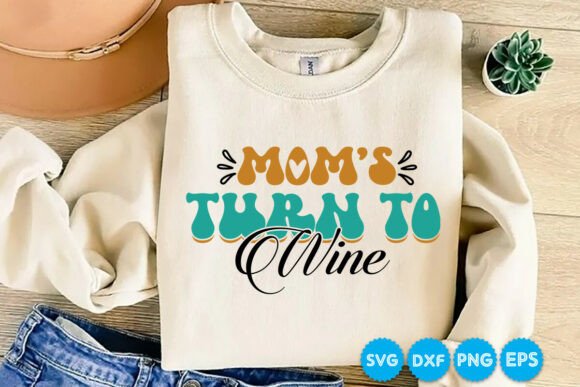
Mom’s Turn to Wine Retro SVG Design
First Impressions: A Nostalgic Smile, Not Just a Graphic
When I opened Mom’s Turn to Wine Retro SVG Design, I didn’t just see letters and a wine glass—I felt the warmth of a well-worn kitchen, the quiet humor in a mom’s unspoken pause after bedtime, and that unmistakable 70s-inspired charm. The layout is balanced but relaxed: bold, slightly rounded retro lettering sits comfortably beside a stylized wine glass with clean lines and subtle shading. It’s not overly detailed—no intricate stems or photorealistic grapes—but that’s its strength. This isn’t a fine-art illustration; it’s a confident, scalable graphic built for real-world stitching.
Real Project Test: Embroidering It on a Linen-Cotton Tote Bag
Last week, I used Mom’s Turn to Wine Retro SVG Design on a natural linen-cotton blend tote for a local boutique’s Mother’s Day launch. I chose a medium hoop size and paired it with tear-away stabilizer underneath and light cut-away on top—just enough to support the fabric’s slight texture without stiffening the final drape. The result? Crisp satin-stitched outlines, smooth fill stitches in the glass and letters, and zero puckering. Customers loved how the design held its personality at 4.5 inches wide—large enough to read clearly, small enough to feel intentional, not loud.
Where It Shines (and Where It Needs Thought)
- Custom apparel: Works beautifully on crewneck sweatshirts and relaxed-fit tees—especially mid-chest or left-chest placements. The retro weight holds up against knit stretch when digitized well.
- Tote bag design & aprons: Its horizontal flow fits naturally across straps, pockets, and bib areas. No awkward cropping needed.
- Embroidered patch & pillow cover: Clean edges translate cleanly into borderless patches and tight-stitch zones on woven fabrics.
- Holiday embroidery & personalized gifts: Perfect for “Mom’s First Christmas” tea towels or baby shower onesies—add a tiny bow or vine motif if needed, but it stands strong solo.
- Craft business & Etsy seller use: It reads as handmade, not mass-produced. Buyers respond to its warmth—not just the wine theme, but the thoughtful spacing and vintage rhythm.
Fabric & Fit Considerations You Can’t Skip
This design thrives on stable, medium-weight fabrics—think cotton twill, denim, canvas, or structured knits. On thin or highly stretchy fabric (like lightweight jersey), I recommend testing stitch density first: too much fill stitch can cause distortion, especially around the curved base of the wine glass. For dark fabric, avoid pale thread unless you’re aiming for subtlety—go for deep burgundy, charcoal gray, or cream for contrast that reads cleanly from three feet away.
On curved surfaces like caps, scale down to 3–3.5 inches and verify letter legibility. The “o” in “Mom” and the stem of the glass are detail anchors—if they blur or collapse during stitching, the whole retro vibe softens. And while the design avoids ultra-thin lines, those inner wine glass highlights rely on precise satin stitch alignment. Always check your machine’s tension and needle size before running a full batch.
Design Assets That Support Real Workflow
The file package—SVG, EPS, DXF, and high-res PNG—is genuinely practical. As an embroidery designer, I imported the SVG directly into my digitizing software and appreciated the layered structure: text and glass separated, ready for color mapping or stitch-type adjustments. The EPS file held crisp curves when scaling for large-format appliqué. The PNG? Essential for quick printable mockups and Etsy listing visuals—I dropped it onto flat-lay photos of mugs, blankets, and baby blankets in seconds.
That said: this is a graphics file—not a pre-digitized machine embroidery design. If you’re new to embroidery digitizing, don’t assume it’s “stitch-ready.” You’ll need to set stitch types (satin for outlines, fill for solids, running stitch for optional accents), adjust underlay, and confirm jump stitch placement. No file format here tells you how many stitches it’ll need—that depends entirely on your digitizer’s choices.
What It Adds to Your Finished Product—Beyond the Obvious
Mom’s Turn to Wine Retro SVG Design elevates perceived value because it feels curated—not generic. When stitched cleanly on a quality tote or apron, it signals attention to tone, audience, and occasion. Moms aren’t buying wine motifs; they’re buying recognition, levity, and a quiet nod to their role. That emotional resonance translates directly to customer trust and repeat orders.
For Etsy sellers and small shop owners, it supports brand consistency when paired with complementary designs—think matching “Dad’s Turn to Grill” or “Baby’s Turn to Nap” in the same retro family. And because it’s clean-lined and moderately sized, it scales well across product types: a single design becomes a cohesive line of nursery decor, holiday gifts, and boutique merchandise without visual fatigue.
Practical Designer Notes Before You Stitch
- Test Mom’s Turn to Wine Retro SVG Design on scrap fabric *first*—especially if using textured or dark material.
- Review thread color contrast in both natural and artificial light. What reads well on screen may vanish on black terry cloth.
- Check stitch density in the wine glass bowl and letter interiors. Overly dense fills trap moisture and wear faster.
- Confirm your hoop size matches the design’s width—and leave at least ½ inch of buffer around all edges.
- Inspect small details at 200% zoom: are corners sharp? Do overlapping elements align cleanly?
- Run black-and-white mockups to assess balance and readability—color can mask weak hierarchy.
- Compare performance on light vs. dark backgrounds. Some retro palettes shift dramatically.
- Use appropriate stabilizer: cut-away for knits, tear-away for wovens, fusible for lightweight linens.
- Verify licensing terms before selling finished items or bundling the files—you’re responsible for commercial use compliance.
A Design That Earns Its Place in Your Library
Mom’s Turn to Wine Retro SVG Design isn’t flashy—but it’s reliable, expressive, and quietly versatile. It fits naturally into T-Shirt Designs collections, yet extends effortlessly into embroidered patches, kitchen textiles, and personalized gifts. For crafters, designers, and small business owners who value authenticity over algorithm-driven trends, it’s less of a “graphic” and more of a conversation starter—one that stitches true, wears well, and keeps customers smiling long after the first wash.